
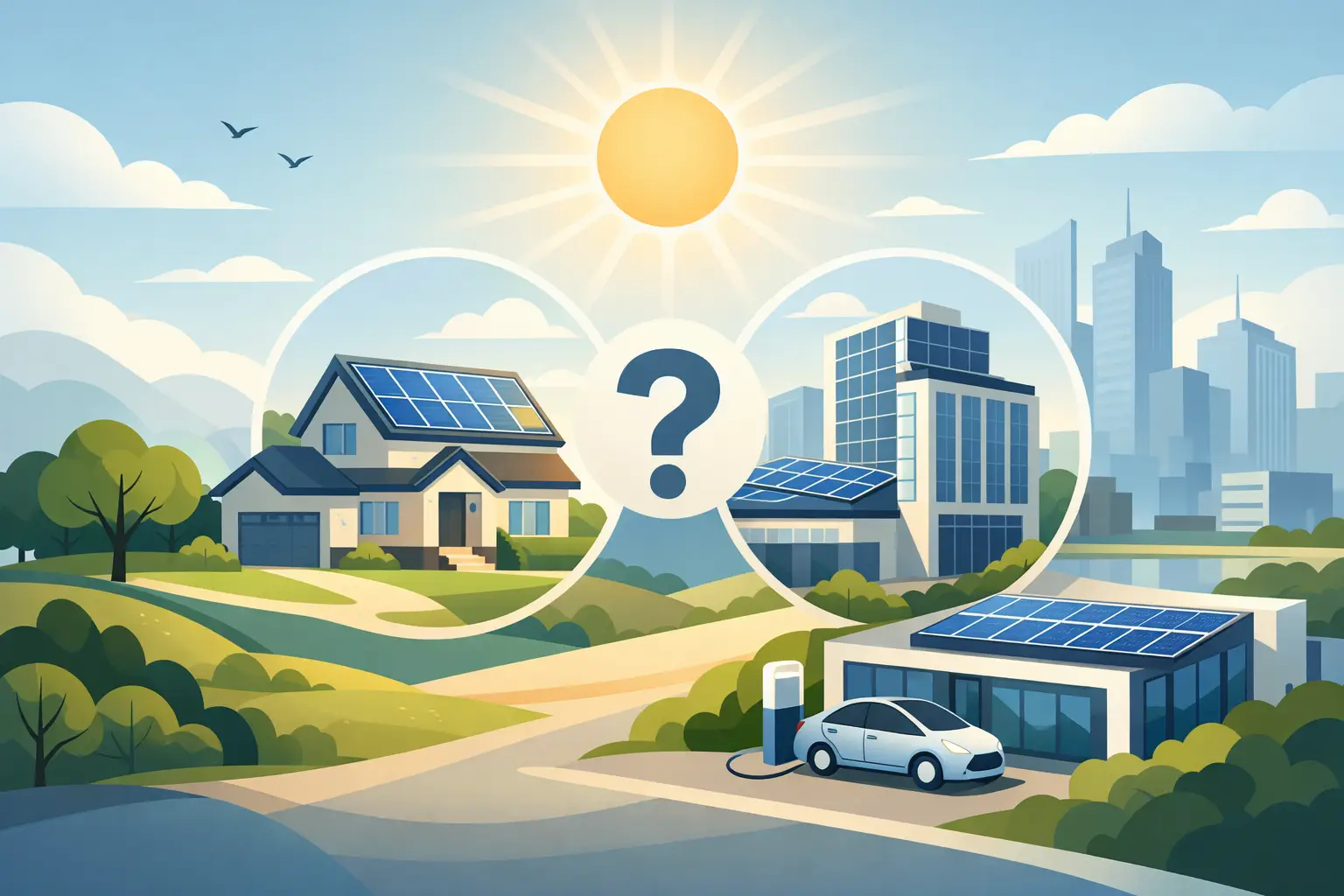
A bright Norfolk morning can produce useful electricity long before the house feels warm enough to turn off the heating. That is the practical appeal of solar panels: they generate power where it is needed, helping households and businesses buy less from the grid when electricity is at its most useful.
For many properties across Norwich, Norfolk and East Anglia, solar PV is no longer a niche addition. It is part of a considered electrical design that can work alongside battery storage, electric vehicle charging, heat pumps and smart controls. The best results do not come from choosing a standard package. They come from matching the system to the building, the way it is used and the owner’s long-term plans.
Are solar panels worth it for your property?
Solar panels are usually most valuable when a property uses a reasonable amount of electricity during daylight hours, or can store surplus generation for use later. A family home with appliances running through the day, a home office, an electric vehicle or a heat pump may have more opportunities to use its own generation than a property left empty from morning to evening.
That does not mean solar only works for one type of customer. A well-designed system can still make sense for a quieter household or a small business. The key question is not simply how much power the panels can generate. It is how much of that power you can use, store or export at a worthwhile rate.
Electricity prices and export tariffs change over time, so no responsible installer should promise a fixed saving without understanding the property. Roof size, orientation, shading, current consumption and future demand all affect the figures. A tailored proposal gives a more useful view of likely generation, self-consumption and payback than a headline price ever can.
What makes a good solar PV design?
A solar installation is a complete electrical system, not just a row of panels on a roof. Panels produce direct current electricity, which is converted by an inverter into alternating current for use in the property. From there, the system needs to work safely with the existing consumer unit, metering arrangements and electricity supply.
The roof matters, but south-facing panels are not the only worthwhile option. East- and west-facing arrays can spread generation across the morning and afternoon, which may suit properties where people are out at work and return later in the day. A south-facing roof may generate more around midday, while a split roof can provide a broader production pattern.
Shading needs careful attention. A chimney, dormer, neighbouring building or mature tree can affect output at certain times of day. The impact depends on where the shade falls and how the array is configured. Modern system design can reduce some of the effect, but it cannot make permanent shade disappear. Being realistic at survey stage avoids disappointment later.
The condition and structure of the roof should also be considered before installation. If a roof covering is likely to need replacement soon, it is often better to address that work first. For new builds and extensions, early coordination with builders, roofers and structural designers makes cable routes, inverter locations and future battery provision far easier to plan neatly.
Battery storage changes how you use your energy
Without a battery, solar electricity is used immediately by the property or exported to the grid. With battery storage, surplus daytime generation can be held back for the evening, when lights, cooking, entertainment and other household demand often rise.
This can increase the proportion of generated electricity used on site, but a battery is not automatically the right choice in every case. Its value depends on the size of the solar array, the household’s evening demand, electricity tariff and budget. A battery that is too small may fill early and leave surplus power to export; one that is oversized may take longer to justify its cost.
For some customers, battery storage is also about greater control rather than savings alone. Smart tariff charging can allow the battery to charge at lower-cost periods and support the property when rates are higher. Backup capability may be possible with the right equipment and design, although this should never be assumed. Not every battery system provides power during a grid outage, and the required backup circuits need to be planned properly.
Plan for the electrical work behind the panels
Solar PV should be installed with the same care as any other part of the electrical system. That means appropriate cable sizing, safe isolation, compliant protection, clear labelling and proper testing on completion. Existing consumer units and supplies need assessing rather than treating as an afterthought.
Some larger systems, commercial sites and properties with significant electrical loads may require further discussion with the local network operator. Export capacity, three-phase supplies and proposed generation size can influence the design and approval process. This is particularly relevant for workshops, offices, agricultural buildings and industrial premises where daytime consumption may make solar especially attractive.
The inverter location is a small decision with a big impact on the finished job. It should be accessible for servicing, suitably ventilated and positioned with sensible cable routes. In a high-specification home, it is worth considering the energy system alongside lighting, data cabling, smart-home controls and EV charging from the outset. A coordinated installation looks better, works more efficiently and leaves less need for disruptive alterations later.
Getting the most from solar generation
Solar works best when electricity use follows generation where practical. This does not require constantly watching an app or running the washing machine only at noon. Smart controls and timed settings can handle much of the work quietly in the background.
A dishwasher, washing machine, immersion heater or EV charger may be set to operate when surplus generation is likely. Businesses can review whether some flexible processes can take place during daylight hours. Battery monitoring also helps owners understand their normal patterns, rather than guessing where electricity is going.
There is a balance to strike. It makes little sense to change daily life around the system for a minor gain. The aim is to make the building work smarter, using automation and sensible scheduling where they genuinely add value.
Questions to ask before choosing an installer
Before committing to a solar project, ask how the proposed system has been sized and what assumptions sit behind the savings estimate. You should understand the expected annual generation, likely self-consumption, battery capacity if included, export arrangements and any limitations caused by the roof or supply.
It is also sensible to ask what testing, certification and handover information will be provided, and who will support the system after installation. Solar equipment is designed for long-term use, so workmanship, clear documentation and accessible support matter as much as the panel specification.
For developers and self-builders, ask how solar will be coordinated with the wider electrical installation. Allowing for PV, batteries, EV charging and smart controls early can avoid an otherwise costly redesign once walls are finished and the property is occupied.
A system designed for the way you live or work
The strongest solar projects start with a proper conversation about the property. A compact city home, a rural family house, a new-build development and a three-phase commercial unit will not have the same energy profile, roof layout or priorities. They should not receive the same answer.
Elite Electrical designs solar PV and battery systems around those real requirements, with the electrical experience to look beyond the panels themselves. If you are considering solar, begin with your bills, your daily usage and the changes you expect over the next few years. That information turns a solar quotation from a simple price into a plan for using your energy more wisely.